

Disclosure: This site is reader supported and purchases made through the links may generate a commision. Thanks for help supporting the site. Information only – not to be considered financial advice.
Imagine an investment that has surged an incredible 249% in just one year. That’s exactly what has happened with one precious metal, creating one of the most dramatic rallies in modern financial history.
As we move through January 2026, this industrial and monetary asset is trading above $114 per ounce. The market has shattered long-standing resistance levels that held for decades. Year-to-date gains have already exceeded 30%, showing no signs of slowing down.
The entire sector has ballooned to over $6 trillion in size. Both individual and institutional investors are paying close attention. Understanding these explosive movements is crucial for anyone considering entry points or evaluating existing positions.
This analysis will examine current records, historical data, and expert predictions. We’ll explore what drives this unique market and practical strategies for navigating it. The outlook considers everything from supply deficits to industrial demand and potential policy changes.
Top analysts project values ranging from $100 to $200+ per ounce. The dual nature of this commodity creates fascinating dynamics that make 2026 particularly compelling for market participants.
Key Takeaways
- The metal has experienced extraordinary gains of 249% over the past year
- Current trading levels have broken through decades-long resistance
- Market size has expanded to over $6 trillion, attracting widespread attention
- The asset serves both monetary and industrial purposes, creating unique dynamics
- Expert predictions vary widely, with some forecasts exceeding $200 per ounce
- Understanding current price movements is critical for investment decisions
- Supply deficits and industrial demand are key factors driving the market
Current Silver Price Records as of 1-28-26
January 2026 has brought extraordinary momentum to the industrial and monetary asset class. The market is experiencing unprecedented activity with remarkable price movements.
Latest Price Data and Trends
As of January 28, 2026, the spot silver price trades above $114.00 per ounce. This represents a historic milestone for the precious metal. Year-to-date gains have already exceeded 30% in less than one month.
The dramatic acceleration during January shows no signs of slowing. Market momentum continues to build from late 2025 through the current period.
Historical Performance: 30 Days, 3 Months, 6 Months, and 2025
Over the past six months, this asset broke through the critical $50 resistance level. That barrier had capped values for over 13 years. The breakthrough occurred in late 2025.
Throughout 2025, the metal gained an impressive 148.14%. This marks one of the strongest annual performances in modern history. Recent gains far exceed historical averages from previous years.
These new all-time highs surpass previous peak levels from 1980 and 2011. The market has entered genuine price discovery territory. Multiple factors drive these records, including supply constraints and industrial demand acceleration.
Our Top Recommendation for Gold or Silver IRAs!

Understanding Silver’s Market Dynamics
Unlike other commodities in its class, this asset serves two distinct masters in the global economy. This dual character creates fascinating market behavior that sets it apart from similar precious metals.
Monetary vs. Industrial Metal Roles
This unique metal functions as both a store of value and an industrial commodity. As a monetary asset, it provides portfolio diversification and protection against inflation. However, its volatility tends to be greater than gold’s.
What truly distinguishes this commodity is its industrial dominance. Over half of global demand comes from manufacturing applications. Its exceptional conductivity makes it irreplaceable in electronics and green technology.
The dual nature means the metal can perform well in different economic environments. During uncertainty, monetary demand typically increases. During expansion, industrial needs drive growth.
Forecasting becomes more complex with these competing forces. They can work together or pull in opposite directions. Understanding this dynamic is crucial for making informed investment decisions.
Currently, both monetary concerns and industrial needs are creating strong demand. This rare alignment contributes to the metal’s impressive performance. Investors should appreciate how these factors interact in the market.
In-Depth Look at Historical Silver Movements
The metal’s journey through past decades offers valuable insights for today’s investors. Understanding previous cycles helps put current market behavior in proper context.
Comparative Performance Over the Years
Recent history shows a dramatic shift in this commodity’s performance. The period from 2021-2024 saw relatively modest movements. Values ranged from -11.55% to +21.36% during those years.
Then came the explosive 148.14% surge in 2025. This represents the strongest annual performance since the early 1980s. The current rally follows years of consolidation.
Major historical events provide important benchmarks. The 1980 Hunt Brothers episode saw values surge from $6 to nearly $50. Regulatory changes then caused a sharp reversal.
A similar pattern occurred in 2011 when prices approached $50 again. Exchange margin requirements increased, bursting that bubble. Both episodes ended with significant corrections.
| Year | Performance | Key Event |
|---|---|---|
| 2025 | +148.14% | Breakthrough $50 resistance |
| 2024 | +21.36% | Moderate growth phase |
| 2023 | -0.72% | Market consolidation |
| 2011 | Peak near $50 | Margin requirement changes |
| 1980 | $6 to $50 surge | Hunt Brothers corner attempt |
Historical patterns don’t guarantee future performance, but they provide essential context for navigating volatile markets.”
What distinguishes the current rally? Structural supply deficits and genuine industrial demand growth create more sustainable foundations. The breakout above $50 represents a major technical achievement after 13 years of resistance.
This commodity has always exhibited extreme volatility. Understanding past boom-and-bust cycles helps investors manage risk effectively in today’s markets.
Our Top Recommended Precious Metals Companies for 2026
Best Precious Metals Companies of 2026
Full rankings • Fee breakdowns • IRA & physical metals analysis
Get more detailed information at our Top Precious Metals Companies List of 2026 Page
Key Drivers Behind the 2026 Silver Price Forecast
Several key factors are driving unprecedented momentum in the white metal’s market performance. Understanding these dynamics helps explain current price movements.
The industrial and monetary asset faces powerful structural forces. Both supply and demand sides contribute to the current market tightness.
Industrial Demand and Supply Deficits
Industrial applications create strong, sustained demand. Solar photovoltaic installations alone consume over 200 million ounces annually.
Emerging technologies add to this pressure. AI data centers require high-efficiency components. Electric vehicles use increasing amounts per unit.
Supply constraints intensify the situation. Markets face their fifth consecutive year of structural deficits. Available inventories have plummeted dramatically.
| Demand Sector | Annual Consumption | Growth Rate |
|---|---|---|
| Solar PV | 200+ million oz | Accelerating |
| AI Infrastructure | Emerging | Rapid |
| Electric Vehicles | Increasing | Strong |
| 5G/Electrification | Sustained | Moderate |
Macroeconomic and Policy Influences
Policy changes significantly impact availability. China recently designated the metal as strategic. This restricts exports and tightens global supply.
Mine production grows slowly at 1-2% annually. Declining ore grades and limited discoveries constrain expansion. Development timelines for new projects remain lengthy.
The convergence of industrial growth and supply constraints creates a fundamentally tight market environment.
These combined factors create a compelling backdrop. Both structural and policy elements support higher valuation expectations throughout the current period.
Silver Price Forecast 2026 According to Top Analysts
Leading financial institutions have released their projections for the white metal’s performance this year. Most experts agree we’ll see values trading between $90 and $120 per ounce. Some bullish scenarios extend even higher to the $150-$200 range.
Bank of America’s Bullish Case
Bank of America presents an optimistic outlook with a target of $170 within two years. Strategist Michael Widmer notes that fundamentals support around $60 per ounce. However, retail demand is pushing values beyond traditional metrics.
The institution highlights how individual investors now drive market movements. Many favor this asset as “real money” amid concerns about fiat currencies. This shift creates new dynamics in the precious metals space.
UBS and Citigroup Perspectives
UBS acknowledges the historic rally but offers caution. They note the metal no longer looks cheap relative to gold. The compressed gold-silver ratio suggests more balanced valuation expectations.
Citigroup forecasts $100 per ounce by March with potential to reach $110 later this year. They point to acute physical shortages as COMEX inventories dropped over 70% since 2020. Structural supply-demand pressures continue to build.
| Institution | Price Target | Timeframe | Key Factor |
|---|---|---|---|
| Bank of America | $170 | 2 years | Retail demand surge |
| UBS | Elevated but volatile | 2026 | Compressed gold ratio |
| Citigroup | $100-$110 | 2026 | Inventory shortages |
| Robert Kiyosaki | $200 | Near-term | Monetary concerns |
Despite varying specific targets, the directional consensus remains strongly positive. All analysts acknowledge increased volatility risks given recent rapid gains. Structural factors continue to support higher price expectations throughout this period.
Block Quotes of 2026 Analyst Predictions
Market analysts offer dramatically different perspectives on where this rally might lead. Their predictions provide valuable benchmarks for evaluating your own investment strategy.
Bank of America – Bull case $170 within 2 years
“If retail buying continues at recent rates, silver could reach $170/oz within two years.”
Bank of America presents an optimistic long-term outlook. However, strategist Michael Widmer notes the rally has overshot near-term fundamentals.
He estimates fair value around $60 per ounce, creating significant volatility risk. The bull case depends heavily on continued retail participation.
Robert Kiyosaki – $200
“$200”
The famous author maintains a strongly bullish position. Despite his optimistic target, he warns investors against FOMO.
Kiyosaki advises patience to wait for corrections before committing capital. He previously suggested even more extreme growth potential over longer periods.
Other major institutions offer contrasting near-term views. Citigroup targets $100 by March with potential for $110 later. UBS expects elevated but volatile conditions with structural demand intact.
This range from $100 to $200+ reflects both the bullish consensus and genuine uncertainty. Each investment carries different risk profiles that require careful consideration.
Impact of Treasury Repricing on Silver Prices
What if the US Treasury decided to fundamentally change how it values its metal holdings? This scenario represents a powerful policy tool that could dramatically affect the silver price landscape.
Potential Policy Actions to Stabilize US Debt
During the Great Depression, the government revalued gold from $20.67 to $35 per ounce. This 69% increase helped stabilize national finances. Today, similar actions could address the $34+ trillion debt crisis.
While not on a silver standard, the government holds substantial metal reserves. Strategic revaluation could strengthen the balance sheet significantly. This approach would likely involve official purchases and price adjustments.
Estimated New Price Projections
To meaningfully impact the national debt, revaluation would need to be substantial. Conservative estimates suggest official prices around $250 per ounce. More aggressive scenarios could reach $500 or higher.
Such government action would remove supply from private markets. This would drive commercial values to match or exceed official levels. The resulting gains could dwarf current analyst predictions.
| Repricing Scenario | Official Price | Gain from Current |
|---|---|---|
| Conservative | $250/oz | +119% |
| Moderate | $350/oz | +207% |
| Aggressive | $500/oz | +338% |
While speculative, this policy scenario deserves consideration. Fiscal challenges make such actions increasingly plausible. Investors should understand these potential tail-risk events.
For comprehensive guidance on positioning for various price scenarios, including potential treasury actions, consider obtaining expert analysis from precious metals specialists.
The Role of Retail Demand and Investment Shifts
A remarkable shift is reshaping the precious metals landscape. Individual investors are now the dominant force, changing how the market behaves.
This new investment demand is less concerned with short-term price swings. People are buying for long-term safety, viewing the metal as “real money.”
The data is stunning. On January 26, 2026, the iShares Silver Trust (SLV) saw a trade volume of nearly $40 billion. This matched the SPY ETF and was almost twenty times its normal activity.
This isn’t a one-day event. Nine of the last eleven months saw net money flowing into these funds. November 2025 had the biggest additions since July.
Social media plays a huge role. Online communities have amplified interest, creating powerful momentum. This new demand is intense and consistent.
| Factor | Old Dynamic | New Dynamic |
|---|---|---|
| Primary Driver | Institutions & Speculators | Retail Investors |
| Motivation | Short-term Profit | Long-term Wealth Preservation |
| Preferred Form | Paper (ETFs, Futures) | Physical (Coins, Bars) |
| Price Sensitivity | High | Low |
The move to physical possession squeezes supply even more. Dealers report record demand, with long wait times and high premiums.
Understanding this retail surge is key. It combines with industrial needs, creating a powerful dual demand that supply can’t match. This investment shift is a core driver of today’s values.
Macro Trends Impacting Silver Markets in 2026
Broader macroeconomic trends beyond supply and demand are exerting powerful influences on metal valuations. These global forces create both opportunities and challenges for investors navigating today’s complex landscape.

US Dollar Movements and Global Economic Uncertainty
The US dollar index fell more than 8% in 2025. This decline created a major tailwind for precious metals. President Trump’s tariff-led trade volatility contributed significantly to this weakness.
Federal Reserve policy expectations for 2026 include potential rate cuts. Lower rates would reduce real yields. This decreases the opportunity cost of holding non-yielding assets.
Global de-dollarization trends provide structural support. Countries are reducing dollar reserves. They’re seeking alternative stores of value amid fiscal uncertainty.
Geopolitical Influences and Export Controls
China designated silver as a strategic resource on January 1, 2026. This fundamentally alters global supply dynamics. Only 44 companies now qualify for export licenses.
The US addition of silver to its critical minerals list signals recognition of strategic importance. This creates risk of additional export controls or tariffs.
Broader geopolitical tensions elevate the metal’s strategic value. Technology competition and resource nationalism create supply constraints. These factors contribute to market volatility while supporting higher valuations.
Economic uncertainty drives safe-haven demand. Inflation concerns and banking stability questions increase investment risk. These macro trends create a supportive backdrop throughout the current period.
Technical Analysis and Key Resistance Levels
The recent breakthrough above long-standing barriers marks a pivotal moment for technical traders. The metal’s move past the $50-$54 zone represents one of the most significant developments in precious metals this decade.
This resistance level had capped silver prices for over 13 years following the 2011 peak. The decisive breakout makes the $50-$54 area major long-term support instead.
Technical targets at $72 and $88 per ounce have been achieved and exceeded. The current spot price above $114 confirms the breakout’s strength.
With the psychological $100 level cleared, the metal enters genuine price discovery territory. Fibonacci extensions suggest next resistance around $125, $150, and $175.
Momentum indicators remain positive but approach overbought extremes. This increases the probability of sharp corrective swings despite the bullish picture.
Traders should identify personal support levels rather than chasing vertical spikes. The first sustained multi-timeframe breakout since 2011 brings both opportunity and volatility risk.
Call to Action: Get a Silver Guide from Birch Gold Group Now
Navigating today’s precious metals landscape requires more than just market timing. With values above $114 per ounce and analysts predicting potential gains to $150-$200 or beyond, comprehensive education becomes essential.
Whether you’re considering your first purchase or evaluating existing positions, having expert guidance helps manage volatility effectively. Birch Gold Group’s Silver Guide provides detailed information on various approaches to silver investment.
The resource covers physical coins and bars, ETFs, mining stocks, and IRA options. It addresses crucial topics like entry timing, premium understanding, storage considerations, and tax implications.
With forecasts ranging widely and scenarios including potential treasury actions, unbiased educational information helps you make informed decisions aligned with your financial goals. This comprehensive resource is available at no cost.
Current rapid appreciation means waiting could result in higher entry prices. Taking this simple step provides valuable knowledge that helps avoid common mistakes and maximize potential returns.
Strategies for New and Existing Silver Investors
Building a successful position in precious metals requires different approaches for newcomers and experienced holders. Current market conditions favor strategic planning over reactive trading.

For new investors, analysts suggest a measured approach. The metal’s rapid appreciation increases the likelihood of sharp pullbacks. This makes timing more important than ever.
Entry Points and Managing Volatility
New buyers should establish positions gradually. Dollar-cost averaging reduces the risk of buying at temporary peaks. Use market corrections as strategic entry points rather than chasing spikes.
Set price targets at support levels like $100 or $95. Attempting to time perfect entries is unrealistic given the metal’s volatility. Scaling in over weeks or months works better.
Staying Invested Through Corrections
Existing holders should view their positions as strategic long-term assets. Analyst consensus supports staying invested through the structural shift to higher price regimes.
Be mentally prepared for sharp swings that may temporarily exceed 20-30%. These movements don’t necessarily undermine the bullish thesis. Consider taking partial profits during extreme upside moves.
Key strategies for all investors include:
- Maintain adequate liquidity to avoid forced selling
- Keep position sizes modest within diversified portfolios
- Have predetermined exit strategies for emotional discipline
- Understand that investment demand creates new market dynamics
Both new and existing participants benefit from recognizing the metal’s unique risk profile. Structural supply-demand imbalances support higher valuations despite price volatility.
Cultivating Investment Discipline in a Volatile Market
Navigating turbulent markets requires more than just financial analysis—it demands emotional resilience. The psychological aspect often separates successful participants from those who react impulsively.
When dealing with assets known for dramatic swings, maintaining control becomes paramount. Robert Kiyosaki specifically warns against FOMO-driven decisions, despite his bullish long-term outlook.
Avoiding Emotional Trading Decisions
Even the most optimistic advocates counsel patience over impulsive buying. Emotional purchases during parabolic spikes often result in entering at temporary peaks.
Experienced traders like Peter Brandt note concerning parallels. Current trading volumes mirror the April 2011 top, suggesting heightened reversal risk.
Former JPMorgan strategist Marko Kolanovic adds important balance with bubble warnings. These reminders help investors maintain perspective during euphoric rallies.
| Emotional Trap | Disciplined Response | Potential Outcome |
|---|---|---|
| FOMO Buying | Wait for Corrections | Better Entry Points |
| Panic Selling | Stick to Strategy | Avoid Losses at Lows |
| Chasing Spikes | Set Price Targets | Reduced Volatility Impact |
| Constant Monitoring | Periodic Check-ins | Reduced Stress |
Successful silver investing means accepting volatility as inherent. Decisions should stem from analysis rather than emotion. Writing down your investment thesis helps maintain discipline during both rallies and corrections.
The most accomplished precious metals investors throughout history maintained conviction. They avoided emotional reactions to short-term prices movements. This approach proves especially valuable in today’s dynamic market environment.
Silver Price Forecast 2026: A Comprehensive Outlook
When weighing all available evidence, a clear picture emerges about the white metal’s potential path. Most institutions expect values to trade between $90 and $120 per ounce throughout the year. This represents the base-case scenario from major financial analysts.
Bullish projections extend significantly higher. Bank of America and prominent investors see potential for $150-$200+ if current trends continue. The directional consensus is unmistakably positive.
Virtually all experts agree we’ve entered a structurally higher valuation regime. The $20-$30 range that prevailed from 2013-2024 appears to be history. This shift reflects fundamental changes in supply-demand dynamics.
Supply constraints create powerful tailwinds. We’re facing the fifth consecutive year of deficits. COMEX inventories have dropped over 70% since 2020. China’s export restrictions further tighten availability.
Industrial demand represents another structural support. Solar energy, electric vehicles, and AI infrastructure create sustained needs. These aren’t cyclical factors that might quickly reverse.
Despite the bullish outlook, universal warnings about volatility accompany these predictions. Expect sharp two-way swings throughout 2026. For deeper technical insights, consider this comprehensive market analysis.
The overall outlook favors strategic investors who can tolerate volatility. While specific targets vary, the structural support remains compelling for those maintaining positions through inevitable corrections.
Integrating Industrial Demand, Supply Constraints, and Policy Effects
Three distinct forces are combining to reshape the precious metals landscape in unprecedented ways. Industrial requirements, production limitations, and government actions create a powerful feedback loop.

Solar photovoltaic installations consume over 200 million ounces annually. This massive industrial demand cannot easily shrink even at higher values. Silver’s unique conductivity makes substitution difficult.
Emerging technologies add more pressure. AI data centers and electric vehicles require increasing amounts. These applications create sustained demand that accelerates faster than mining can match.
Mine production grows only 1-2% yearly. COMEX inventories dropped over 70% since 2020. These supply constraints create the fifth straight year of structural supply deficits.
Policy actions magnify the imbalance. China’s strategic resource designation restricts exports. The US critical minerals list signals potential government buying. Both reduce available supply.
This integration creates a unique situation. Industrial demand remains strong despite higher costs. Production cannot quickly expand. Policy actions further limit availability.
The combination explains why analysts expect sustained elevation. When all three factors align, they amplify effects beyond any single driver’s impact.
Opportunities and Risks for 2026 Silver Investments
The current environment presents a fascinating dichotomy for precious metals enthusiasts. On one hand, analysts project targets reaching $100-$200+ per ounce. These represent substantial gains even from today’s elevated levels.
Structural supply deficits create compelling opportunities. The market faces its fifth consecutive year of shortages. Mine production cannot quickly increase to meet demand.
Industrial needs from renewable energy and AI technologies provide sustained support. These megatrends are in early growth stages. They create years of potential demand ahead.
Risk Management in Bullish Yet Volatile Markets
However, significant risks accompany these opportunities. UBS warns that this commodity’s small, thinly traded market amplifies both rallies and reversals. Sharp corrections become inevitable in such conditions.
Valuation concerns also loom large. Some institutions note that current prices have moved faster than fundamentals justify. This creates vulnerability to potential pullbacks.
Experienced observers like Marko Kolanovic highlight bubble risks. They compare current conditions to past commodity manias that ended badly for late buyers.
Policy risks include potential margin requirement increases and export restrictions. Liquidity can evaporate during sharp corrections. This makes exiting positions challenging.
Effective risk management requires careful position sizing. Maintaining adequate liquidity and avoiding leverage are crucial. Setting predetermined exit strategies provides emotional discipline.
2026 offers extraordinary potential for well-positioned investors. Success depends on understanding and managing the accompanying volatility through disciplined practices.
Market Sentiment and Future Trajectories
Market participants are displaying behaviors that suggest this rally has unique characteristics. Current sentiment shows extreme bullishness with call-option premiums at their highest since 2022.
Despite strong gains, managed-money positioning remains below historical peaks. This indicates the move isn’t overstretched from a speculative standpoint.
Investor Behavior and Strategic Adjustments
Retail investors increasingly view this metal as “real money” amid systemic concerns. This creates more persistent demand than short-term speculation.
The gold-silver ratio has compressed to around 52. This sits within the long-term average range of 40-60.
Historical bull markets have seen this ratio drop below 40. This suggests potential for continued outperformance if patterns repeat.
Anticipated Scenarios for Price Swings
Several scenarios could unfold in coming months. The bullish case sees values reaching $150-$200 with sustained retail buying and supply shortages.
A base-case scenario involves consolidation between $90-$120 with high volatility. This would allow fundamentals to catch up with current price levels.
Bearish possibilities include corrections to $70-$80 support levels. Profit-taking or economic slowdowns could trigger these moves.
Strategic investors should prepare for multiple outcomes. Maintaining flexible positioning and preserving capital for corrections proves wise in volatile conditions.
Secure Your Silver Guide from Birch Gold Group Now
Having examined every angle of the silver investment opportunity, the next step is clear. Education becomes your most valuable asset when navigating these dynamic markets.
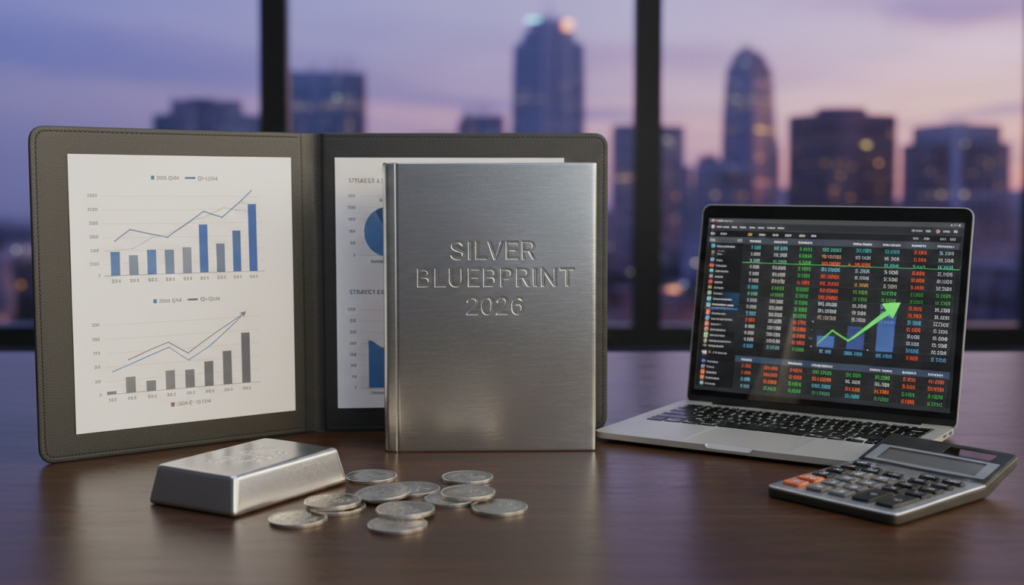

Whether the potential gains or volatility concerns resonated more strongly with you, knowledge is essential. Birch Gold Group’s comprehensive Silver Guide covers all the critical topics we’ve discussed.
You’ll find practical guidance on timing strategies and managing market swings. The resource explains different investment vehicles and proper portfolio allocation.
For those considering physical ownership, the guide details coins versus bars. It covers premiums, reputable dealers, storage options, and security considerations.
Retirement savers will appreciate the silver IRA section. This explains tax-advantaged ways to gain precious metals exposure.
With current market momentum and analyst expectations for continued movement, delaying could mean missing strategic opportunities. This free resource provides unbiased information to help you make informed decisions.
Take immediate action by visiting Birch Gold Group now to request your complimentary Silver Guide. This simple step gives you the foundation to navigate the exciting silver market with confidence.
Conclusion
Investors face a remarkable scenario where fundamental support meets significant price swings. The 2026 outlook combines unprecedented opportunity with the need for disciplined risk management.
Analyst projections span from $90-$120 to bullish $150-$200+ targets. Structural deficits entering their fifth year create solid foundations. Industrial demand exceeding 200 million ounces annually from solar, EVs, and AI provides sustained momentum.
Policy actions have reshaped global supply dynamics. China’s strategic designation and export restrictions remove substantial metal from markets. Macroeconomic factors like potential Fed rates cuts and dollar weakness offer additional tailwinds.
Success requires balancing conviction with caution. Emotional decisions during volatility can undermine long-term gains. Proper education and strategic positioning are essential for navigating this dynamic environment.
Request your complimentary Silver Guide from Birch Gold Group to make informed decisions. With careful planning, investors can potentially benefit from one of the most compelling commodity stories this decade.