Disclosure: This site is reader supported and purchases made through the links may generate a commision. Thanks for help supporting the site. Information only – not to be considered financial advice.
Did you know that over half of annual silver demand comes from industrial applications? This white metal powers everything from smartphones to solar panels, making it essential for modern technology.
Silver occupies a unique position as both a precious metal and industrial commodity. Like gold, it serves as a store of value. But its widespread use in electronics and green energy gives it additional demand drivers.
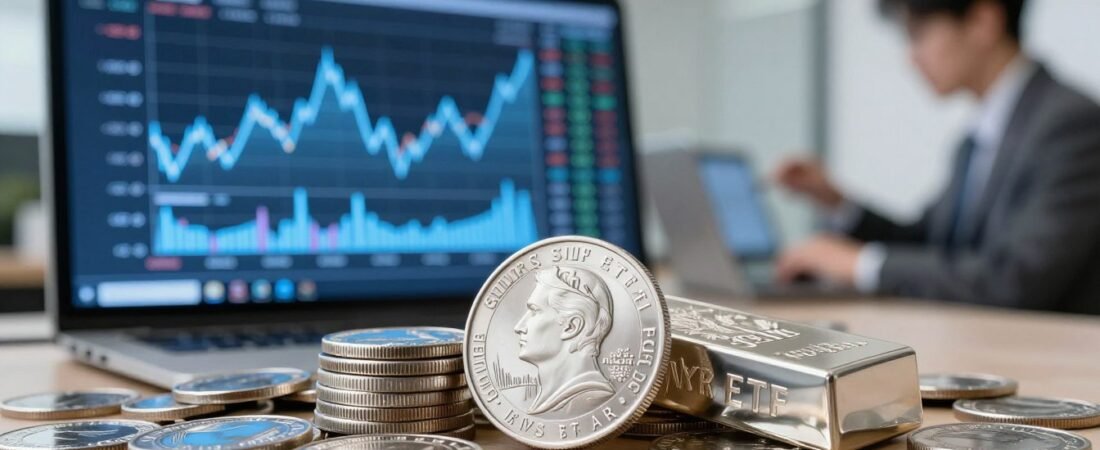
The way you choose to own this versatile asset matters greatly. Your decision affects costs, convenience, security, and potential returns. Both approaches give you exposure to the same underlying metal.
However, the investment experience differs significantly. Understanding these differences helps you make smarter choices aligned with your financial goals.
Free Gold IRA Guide
Find the company path that fits your investment range
Answer two quick questions to see the Gold IRA company path matched to the amount you’re considering. No name, email, or phone number is required to view the result.
Key Takeaways
- Silver serves dual roles as both precious metal and industrial commodity
- The ownership method impacts costs, convenience, and liquidity
- Both approaches provide exposure to the same underlying asset
- Your choice should align with personal preferences and investment objectives
- There’s no single “correct” answer for all investors
- Storage requirements and tax implications vary between options
- Understanding both vehicles helps make informed decisions
Understanding the Silver Investment Landscape
The story of silver investment spans millennia, connecting ancient markets with today’s digital economy. This versatile metal has maintained its appeal across generations of investors seeking stable assets.
Historical Context and Modern Trends
Throughout various economic times, silver has demonstrated remarkable resilience. Its value preservation qualities shine during periods of market uncertainty.
Modern trends show growing industrial demand reshaping the investment landscape. Green technologies and electronics drive new applications worldwide.
Significance in Precious Metals
Among precious metals, silver occupies a distinctive position. Unlike gold, it serves dual purposes as both monetary asset and industrial commodity.
| Metal | Price Accessibility | Industrial Use | Historical Stability |
|---|---|---|---|
| Silver | High | Extensive | Strong |
| Gold | Moderate | Limited | Excellent |
| Platinum | Low | Significant | Variable |
This unique combination makes silver investments attractive for diverse portfolios. The metal’s accessibility appeals to both new and experienced investors.
The Essence of Physical Silver
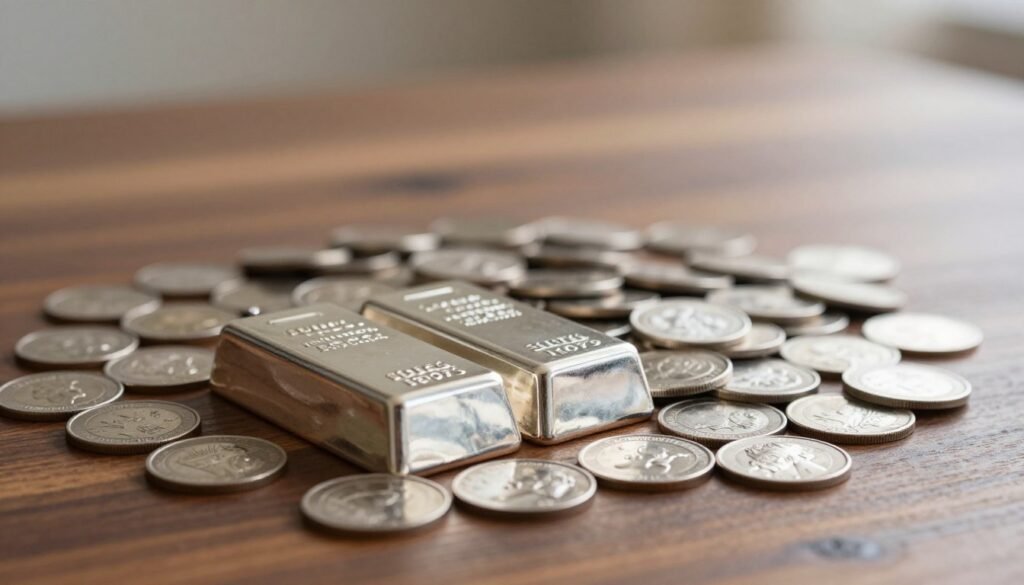
When you invest in tangible assets, you’re not just buying numbers on a screen—you’re acquiring something you can actually touch and see. This direct approach to precious metals offers a unique experience that appeals to many investors seeking concrete value.
Ownership and Tangibility
True ownership means you hold the actual metal in your preferred form. Popular choices include government-minted coins and investment-grade bars. Each option provides the same underlying value but differs in size and design.
The psychological comfort of tangible ownership cannot be overstated. Holding your investment creates a sense of security that paper certificates cannot match. You maintain complete control without relying on financial intermediaries.
This eliminates counterparty risk entirely. Your wealth depends solely on the metal’s value, not any institution’s stability. You can access your assets anytime, regardless of market hours or system availability.
Storage and Security Considerations
Proper storage solutions are essential for protecting your investment. Home safes offer immediate access but require robust security measures. Bank safety deposit boxes provide professional protection with limited accessibility.
Professional vaulting services offer the highest security level. However, they involve ongoing fees and insurance costs. Each option balances convenience with protection based on your individual needs.
Remember that secure storage is an ongoing responsibility. It requires planning for insurance coverage and regular security assessments. These considerations are part of the commitment to tangible asset ownership.
Exploring Silver ETFs
The digital age has transformed how we invest in commodities, with ETFs bringing unprecedented accessibility to silver markets. These investment vehicles offer a streamlined approach to precious metals exposure.
Exchange-traded funds track silver prices by holding the actual metal in secure vaults. Investors purchase shares that represent ownership without handling bullion directly. This eliminates storage concerns and purity verification needs.
Liquidity and Trading Ease
One major advantage of these funds is their exceptional liquidity. You can buy or sell shares instantly during market hours through any brokerage account.
This flexibility makes them ideal for investors who value quick position adjustments. Market conditions or personal financial needs can be addressed without delay.
Cost Structures and Management Fees
Unlike physical bullion with upfront premiums, these vehicles involve ongoing expenses. Annual management fees typically range from 0.25% to 0.50% of your investment.
Additional considerations include tracking error and potential brokerage commissions. However, these costs may be offset by the convenience and broad market access provided.
physical silver vs silver ETF: A Direct Comparison
Putting these two investment approaches side by side reveals clear distinctions that affect your experience. Each method offers unique benefits and challenges worth considering carefully.
Key Differences in Ownership and Access
When you buy actual metal, you gain complete control over your assets. You can store them wherever you choose and access them anytime.
Paper-based investments work differently. You own shares representing metal held by financial institutions. This provides convenience but involves third-party dependence.
Liquidity varies significantly between options. Electronic trading allows instant transactions during market hours. Selling bullion requires finding buyers and verifying quality.
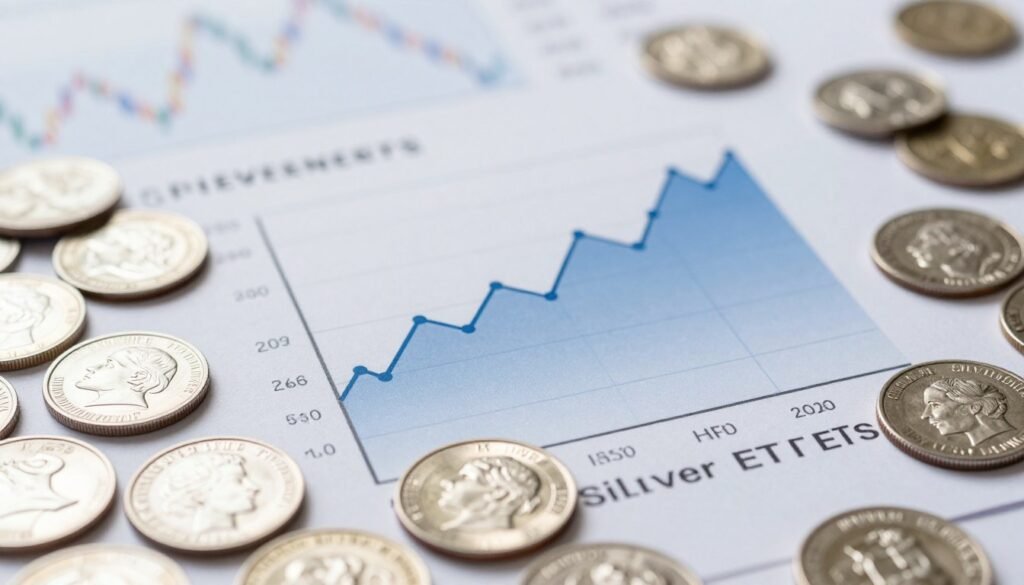
Analysis of Investment Costs and Risks
Each approach carries distinct expenses. Bullion purchases include dealer premiums and storage costs. Paper investments involve management fees that accumulate over time.
Risk profiles differ substantially. Tangible assets face security concerns but avoid counterparty risk. Electronic options eliminate storage worries but depend on fund management.
Minimum investment amounts also vary. You can start small with share-based purchases. Bullion typically requires larger initial commitments.
Price transparency favors electronic trading with real-time data. Local market rates for metal can fluctuate between dealers.
Tax Implications and Returns
Many investors overlook a crucial factor that can significantly impact their silver investment returns: tax implications. Understanding how your gains are taxed helps you make smarter decisions with your money.
Tax treatment varies between different investment vehicles. Your net returns depend heavily on these rules. Smart planning can save you substantial amounts.
Tax Treatment for Physical Silver
When you own actual metal, the IRS typically treats it as a collectible. Long-term capital gains face a maximum 28% federal tax rate. This is higher than most stock investments.
Short-term gains follow your ordinary income tax bracket. Proper documentation of purchase dates and prices is essential. These rules apply to coins, bars, and other tangible forms.
Tax Considerations with Silver ETFs
Exchange-traded funds have different tax structures depending on their design. Some vehicles like SLV are taxed as collectibles, similar to physical holdings. Others may receive more favorable treatment.
PSLV, a popular trust structure, often has different tax implications. Most funds report annual tax information to help with filing. Consulting a tax professional ensures you understand your specific situation.
Always seek professional tax advice since laws change and individual circumstances vary. Your after-tax return is what truly builds wealth over time.
Evaluating Pros and Cons of Each Investment Type
Every investment decision involves balancing rewards against potential drawbacks. Your personal preferences and financial goals will determine which trade-offs make sense for your situation.
Let’s examine the key benefits and limitations of both approaches to help you make an informed choice.
Benefits of Tangible Assets
Holding actual metal provides psychological comfort that paper investments cannot match. You enjoy true ownership without relying on financial institutions.
These assets offer independence from electronic systems and serve as a hedge during economic uncertainty. The emotional value of tangible wealth provides unique security.
Updated October 2026 · Precious Metals Central rankings
Top 5 Precious Metals Companies for 2026
Large, readable comparisons for retirement-age investors. Rankings reflect account fit, service focus, storage options, existing fee information, and the editorial assessment described on this site.
Best for larger accounts
Augusta Precious Metals
Education-first Gold IRA support for people considering $100,000 or more in eligible retirement savings.
- PMC fit
- $100,000+
- Provider minimum
- $50,000†
- Sample recurring
- $225†
- PMC score
- 4.9 / 5
Known for high-touch education and support for larger retirement accounts. Confirm all current costs and eligibility before proceeding.
Best for smaller accounts
GoldenCrest Metals
Our preferred company path for Gold IRA investors starting at a $10,000 minimum and considering less than $100,000.
- Provider minimum
- $10,000†
- Published ongoing
- $250†
- Metals
- Gold & Silver
- PMC score
- 4.8 / 5
Ask GoldenCrest to confirm its current promotions, storage arrangements, fees, and buyback terms for your proposed account.
Best for bullion
Metals Edge
A direct precious-metals purchasing path focused on transparent pricing and helping bullion buyers compare the amount of gold or silver received.
- Best fit
- Physical Bullion
- Metals
- 4 Metals†
- Options
- Cash & IRA
- PMC score
- 4.7 / 5
Compare the complete delivered price, premium over spot, shipping, insurance, and buyback terms before purchasing bullion.
Best for rollovers
Birch Gold Group
An established precious-metals company with educational resources and support for retirement-account rollover research.
- Recommended start
- $5,000†
- Common annual
- $235†
- Metals
- 4 Metals
- PMC score
- 4.6 / 5
Known on this site for an established operating history, educational materials, and a flat-fee structure that should be reconfirmed.
Secure Texas storage
Noble Gold Investments
A precious-metals IRA option highlighted for access to a Texas-based depository and a broad precious-metals selection.
- Best fit
- Storage choice
- Featured facility
- IDS Texas†
- Metals
- 4 Metals
- PMC score
- 4.5 / 5
Confirm depository availability, insurance, segregated-storage terms, total annual costs, and eligible product choices directly.
| Feature | Tangible Assets | Electronic Platforms |
|---|---|---|
| Ownership Control | Complete | Third-party dependent |
| Storage Concerns | Requires planning | None |
| Transaction Speed | Varies by market | Instant |
| Minimum Investment | Typically higher | Flexible |
Advantages of Electronic Trading Platforms
Modern trading platforms eliminate storage and security concerns entirely. You benefit from high liquidity and transparent price tracking.
These vehicles offer easy integration with existing brokerage accounts. Small amounts can get you started without large commitments.
Remember that management fees accumulate over time, affecting overall returns. Each method serves different investor needs effectively.
Investor Suitability and Strategic Considerations
Matching your investment personality with the right silver vehicle can dramatically improve your experience and results. This section helps you identify which approach aligns with your lifestyle and financial objectives.
Who Should Choose Physical Silver
Tangible assets appeal to investors who value complete control and independence. If you prefer holding your wealth directly without third-party involvement, this approach makes sense.
Long-term wealth builders often favor this method. It provides psychological comfort during economic uncertainty. Cultural traditions and gifting purposes also make tangible metal attractive.
You’ll need to handle storage and security responsibilities. But many find this worthwhile for the peace of mind it brings.
Ideal Candidates for Silver ETFs
Electronic trading suits investors prioritizing convenience and flexibility. Busy professionals appreciate the hassle-free approach to market exposure.
This form works well for those starting with smaller amounts. Active traders benefit from instant liquidity and easy portfolio adjustments.
If you want seamless integration with existing securities, these funds offer practical solutions. They eliminate storage concerns entirely.
| Investor Profile | Preferred Method | Key Reasons |
|---|---|---|
| Self-reliant long-term holder | Tangible assets | Direct control, independence |
| Convenience-focused trader | Electronic funds | Liquidity, integration |
| Cultural/gifting purposes | Physical form | Tangibility, tradition |
| Small regular contributor | Share-based | Flexibility, low entry |
Reflect on your storage capabilities, risk tolerance, and investment style. The right choice depends on your unique situation and goals.
Market Influences and Economic Indicators
Behind every price movement in the silver market lies a complex web of economic indicators and industrial demand factors. Understanding these forces helps you anticipate opportunities and manage risk effectively.
Global economic health directly impacts precious metal values. When uncertainty rises, many turn to this asset as a safe haven.
Impact of Global Economic Trends
Inflation rates and interest decisions create significant price swings. Central bank policies can make this metal more or less attractive compared to other investments.
During economic stress, demand often increases as people seek stability. This creates buying pressure that can drive values higher.
For most people, a direct rollover is the preferred route.
Our #1 Recommendation for 2026! Call or Visit Now for Your Free Guide. A Florida Licensed and Bonded Precious Metals Company.
Read more in our feature article.

Role of Industrial Demand and Price Volatility
Industrial applications consume about half of annual supply. Electronics, solar technology, and medical devices rely heavily on this material.
The green energy transition creates new consumption patterns. This growing need introduces both stability and volatility to the market.
Smaller market size means prices can move more dramatically than larger commodities. This presents both higher risk and potential reward for informed investors.
Diversification and Long-term Portfolio Strategy
Smart investors understand that spreading risk is fundamental to long-term financial success. Including various asset types creates a balanced approach that can weather market fluctuations.
A well-structured portfolio often includes precious metals alongside traditional holdings. This mix provides stability when other markets face challenges.
Hedging Against Inflation
Hard assets like bullion serve as excellent protection during inflationary periods. Their value typically rises when currency purchasing power declines.
Historical data shows that gold and silver maintain worth when paper assets struggle. This makes them valuable components for wealth preservation.
Many financial advisors recommend allocating 5-15% of a portfolio to these defensive holdings. The exact percentage depends on individual risk tolerance and goals.
Combining different precious metals enhances your inflation hedge strategy. Each metal offers unique characteristics that complement the others.
Conclusion
Your journey through silver investment options reveals two distinct paths to the same destination. Both approaches give you exposure to this versatile metal’s value.
There’s no single correct answer for all investors. Your ideal choice depends on personal circumstances and financial goals.
Consider your liquidity needs, storage capabilities, and investment philosophy. Many experienced investors use a hybrid approach for balanced exposure.
Silver remains a valuable diversification tool in today’s world. Whether through tangible assets or electronic funds, it offers stability.
Start with the option that feels most comfortable. You can always adjust your strategy as your knowledge grows.