

Disclosure: This site is reader supported and purchases made through the links may generate a commision. Thanks for help supporting the site. Information only – not to be considered financial advice.
Surprising fact: photovoltaics used 142 million ounces of silver in 2023, about 13.8% of global consumption, while the industry faces a projected 32% build rate in 2024.
This piece asks a focused question: does the headline mean more silver per device, per watt, or simply rising total consumption because installations are scaling up?
We base this trend analysis on published benchmarks and hard data — mg per cell, mg per watt, and million-ounce totals — not viral claims. You will see how two forces can be true at once: ongoing thrift in silver use per cell and rising aggregate demand as manufacturing volumes expand.
We also flag a key technical shift: newer N-type architectures can raise metal intensity even as older lines got leaner. That matters for the U.S. because material inputs have real pricing power that can affect module price, project economics, and deployment timelines.
Next: a clear roadmap will walk through definitions, current usage, demand drivers, supply constraints, and practical implications for manufacturing, procurement, and policy.
Key Takeaways
- 142 million ounces were used by photovoltaics in 2023, a sizable share of total consumption.
- Growth forecasts and declining mine supply increase pressure on material markets.
- Both per-unit thrift and higher total demand can coexist.
- Technology shifts may raise metal intensity per watt even as processes improve.
- U.S. stakeholders should watch price and supply risk for project planning and policy.
What the “50% More Silver” Claim Really Means in 2024-2025
Numbers quoted in headlines often mix three distinct concepts. The claim can mean higher metal per module, greater milligrams per watt because of a technology shift, or larger annual consumption as installations scale.
How the metrics differ
Per cell measures mass on a wafer. Per watt divides that mass by output, so bigger wafers or higher-efficiency cells change the ratio even if mass stays steady.
Why annual demand can rise
Manufacturers can reduce mg per cell while total consumption climbs if gigawatt production grows rapidly. This is the classic scale-beats-thrifting dynamic in demand and consumption.
Where the headline shows up
N-type families (TOPCon, heterojunction) tend to have higher paste intensity per watt versus Mono PERC. For procurement and cost models, mg/W of paste is the most decision-useful metric.
| Architecture | Reported mg/W | Relative vs. Mono PERC |
|---|---|---|
| Mono PERC | ~9 mg/W | Base |
| TOPCon | ~13 mg/W | ~1.4× |
| Heterojunction | ~22 mg/W | ~2.4× |
Why Silver Is Used in Solar Cells and Panels
Contacts printed on each wafer do the heavy lifting: a conductive paste is printed to form fingers and busbars that collect electrons generated by sunlight and route them into the wider system.
Silver paste as the current pathway
The paste bonds to silicon and becomes the electrical pathway. It must adhere, conduct, and survive heat and moisture over decades.
Conductivity and reliability advantages
Silver is the most conductive metal, so it minimizes resistive loss and supports steady power output. For project financiers and operators, small resistance gains mean measurable energy loss over a lifetime.
Efficiency targets and metallization pressure
Higher cell efficiency often drives tighter designs and finer prints. That can raise paste intensity even when lines get thinner.
Substitution is tough: any alternative must match adhesion, corrosion resistance, contact resistance, and compatibility with high-speed printing before it can scale.
- Printed paste → collects electrons
- High conductivity → lower losses, reliable energy
- Manufacturing compatibility → critical for bankability
How Much Silver Do Solar Panels Use Today?

Per-cell benchmark
Current published estimates put the average cell at about 111 milligrams of silver per cell. That figure gives a clear anchor for comparisons and procurement models.
Historical thrifting
In 2009 the typical cell used roughly 521 mg. Continuous process improvements and print optimization drove that decline over the last decade.
Context and cost
Per-cell load is not the whole story. Larger wafers, higher watts per cell, and N-type architectures can push the total metal per module up even if mg per cell stays constant.
As a practical roll-up, third-party estimates place grams per panel near ~20 g for some designs and vintages. That metal can be up to about 6% of module cost in published summaries, so price swings matter to margins.
- Anchor: ~111 mg per cell today
- 2009 baseline: ~521 mg per cell
- Range: grams per panel vary by design and architecture
Next: even with thrifting, total demand can climb as higher-intensity technologies and bigger manufacturing volumes scale up.
solar panels require 50% more silver: What’s Driving the Trend
A close look shows that shifts in cell architecture and rapid capacity growth explain the headline’s claim.
Technology transition and per‑watt intensity
N-type architectures (TOPCon, heterojunction) use different contact layouts and paste formulations. That raises mg/W even when engineers cut mg per cell through better printing.
Manufacturing surge and scale effects
Global production jumped in recent years. When annual output moves into the hundreds of gigawatts, a few extra milligrams per watt multiply into large consumption shifts.
Paste intensity signals
Reported benchmarks remain useful diagnostics. Typical values show Mono PERC ~9 mg/W, TOPCon ~13 mg/W, and heterojunction ~22 mg/W. Leading lines can drop these by roughly one‑third, but diffusion is uneven.
| Architecture | Typical mg/W | Notes |
|---|---|---|
| Mono PERC | 9 mg/W | Baseline, widespread legacy tech |
| TOPCon | 13 mg/W | Major share in Chinese production (>85%) |
| Heterojunction | 22 mg/W | Highest intensity; gains efficiency at cost of paste use |
| Best‑in‑class lines | ~10 mg/W | Possible with investment if metal prices justify change |
Latent demand and price feedbacks
Cheaper metal can make higher‑intensity technologies more attractive. That creates latent demand: usage rises without extra installations as manufacturers opt for designs that use more paste.
For forecasters, modeling must track technology mix, thrifting diffusion, and output growth. Later sections discuss mitigation levers: process innovation, copper substitution trials, and recycling pathways.
Photovoltaics’ Rising Share of Global Silver Demand
Photovoltaics have moved from a negligible line item to a material driver of global metal markets.
Historic shift: In the early 2000s PV accounted for under 1% of total consumption. By 2019 that share rose to about 10%—roughly 98.7 million ounces of demand, per Metals Focus data cited in analyst summaries.
Recent benchmark: The Silver Institute and related summaries report photovoltaics used 142 million ounces in 2023, equal to about 13.8% of global demand.
2024 signals and implications
Some industry reports, including a 2025 update from Rethink, put the sector’s share nearer to 19% in 2024. Estimates vary by methodology, but the direction is clear: the industry is taking an ever-larger slice of world supply.
- Structural shift: PV moved from rounding error to double-digit share as deployment scaled.
- Market impact: Industrial demand growth can tighten availability even when investment or jewelry demand swings.
- Capital allocation: As PV becomes a key end-market, materials constraints influence manufacturing economics and project planning.
Why ounces matter: Millions of ounces are not just headline figures. When inventories tighten, each additional ounce can push marginal costs and affect module pricing and procurement choices.
Next: Rising PV share matters most when overall supply growth is limited, which sets the stage for inventory drawdowns and price pressure.’

Silver Supply vs. Demand: Deficits, Inventories, and Price Pressure
Market balance depends on how quickly industrial usage grows versus how fast supply can follow.
The World Silver Survey framing shows industrial demand now accounts for roughly 55% of total demand, reaching about 654 million ounces in 2023 within a ~1.2-billion-ounce market. That shift makes manufacturing-led demand a primary driver of market moves.
Why supply is constrained
Mine production has been essentially flat for about ten years. Output fell ~1% in 2023 and was expected to fall again in 2024 to about 823 million ounces.
Only about 28.3% of operations produce silver as their primary product. The rest is by-product output tied to copper, lead, and zinc economics, so the market cannot rely on price signals alone to spur rapid production growth.
Inventories and price risk
Exchange inventories have dropped by roughly 480 million ounces since February 2021. That large drawdown reduces the buffer that normally soaks up shocks.
Because mine expansion and new projects have five- to eight-year lead times, even strong investment cannot fix short-term deficits. Persistent gaps between demand and production create upward pressure on price and increase volatility.
| Metric | 2023 Value | Implication |
|---|---|---|
| Industrial demand share | ~55% | Manufacturing dominates total demand |
| Industrial demand (ounces) | ~654 million ounces | Large, growth-sensitive consumption |
| Mine production | ~823 million ounces (2024 proj.) | Flat to declining; limited near-term growth |
| By-product production share | ~72–71.7% | Supply tied to other metal economics |
| Exchange inventories change | -~480 million ounces since Feb 2021 | Smaller buffer → higher volatility risk |
What this means for deployment and procurement
When industrial demand rises quickly, the market tightens disproportionately. Procurement teams and project developers should expect price swings and plan longer lead times, hedging strategies, and alternative sourcing to manage risk.
What Rising Silver Prices Mean for the Solar Industry in the United States
Rising commodity costs are already reshaping margins across U.S. cell and module manufacturing. A near‑33% rally in 2024 hit paste budgets directly, since metallized paste contains high metal content.
Margin pressure and downstream pricing risk
When metal price climbs, paste cost moves quickly and compresses maker margins. Some estimates place metal at up to 6% of module cost, which matters in a tight, competitive market.
Producers may pass increases to buyers. That raises bids for EPCs and can cut project IRRs, slowing utility and commercial deployment if financiers balk.
Policy goals versus material constraints
Federal incentives seek faster deployment, but material tightness can create timing risk during procurement windows. Price spikes force re-pricing or delays for projects with strict financing covenants.
- Exposure: Developers face higher upfront cost and schedule uncertainty.
- Responses: Longer offtake deals, wider supplier mixes, and flexible design choices reduce single-tech dependence.
- Signal: Rising costs accelerate thrift, alternative metallization research, and recycling efforts.
| Impact Area | Immediate Effect | Common Response |
|---|---|---|
| Manufacturer margins | Compression from higher paste cost | Cost pass-through or process thrifting |
| Project finance | Lower IRR, possible delays | Hedging, longer negotiation windows |
| Policy goals | Deployment friction despite incentives | Focus on domestic supply resilience |
Innovation to Reduce Silver Use Without Sacrificing Solar Power Output
Process advances now target metallization as an integrated cost and quality problem. Manufacturers refine screen printing, tighten process control, and update paste chemistry to cut metal loadings while holding yield.
Screen-printing gains and limits
Silver thrifting means finer prints, more precise squeegee control, and advanced paste formulations. These moves lower grams per cell with minimal performance loss.
Reality check: gains deliver diminishing returns. Push too far and resistive losses or yield drops offset savings.
Design levers for lower metal use
Slimmer interconnections, optimized busbar layouts, and higher packing density reduce metallized area while keeping or boosting module power. These levers work best when paired with robust measurement.
Measurement and R&D tools
Near-infrared spectroscopy and reflectivity analysis link small material changes to real output differences. That data helps validate durability across high-speed production lines and supports bankability.
Timeline: Fraunhofer ISE leadership expects reductions toward ~50 mg per cell within roughly ten years, a planning horizon rather than near-term relief.
Next: beyond thrifting, step-change options include copper metallization and improved recycling to offset rising metals demand for solar production.
Alternatives and Offsets: Copper Metallization and Silver Paste Recycling
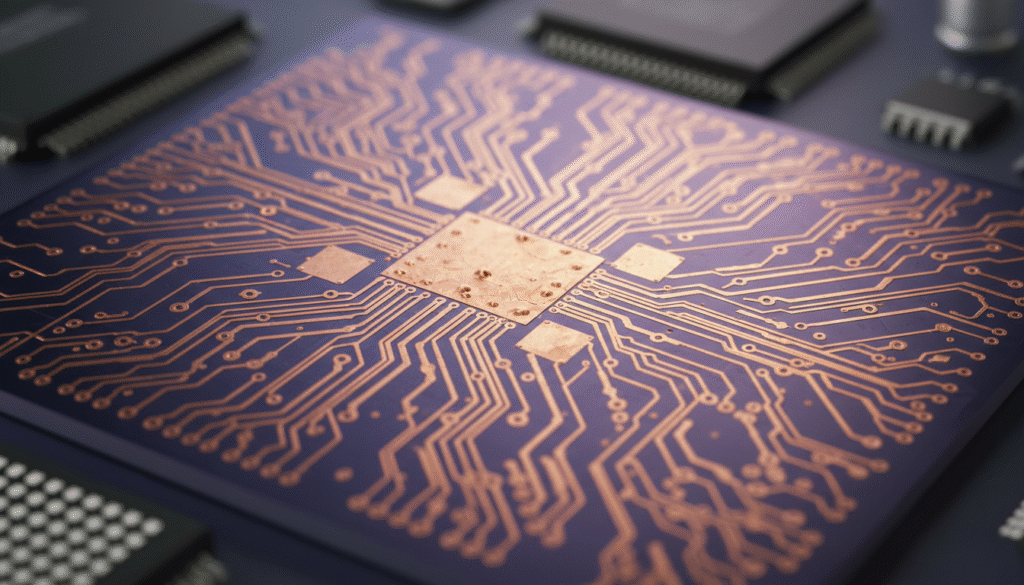
Manufacturers and recyclers are testing two clear routes to cut metal exposure: copper metallization and higher-value paste recovery.

Copper as a substitute: attraction and barriers
Copper is attractive because it is cheaper and more abundant than the precious metal in paste. That reduces exposure to price spikes and tight supply.
But scaling copper is hard. Process compatibility, adhesion, corrosion control, and low contact resistance must be solved for billions of cells.
Breakthrough claims and realistic timelines
Some vendors report demos that cut paste load from ~6 mg/W to ~0.5 mg/W by switching to copper. Those claims are promising.
Reality check: industry analysts expect widespread adoption to take several years as equipment, reliability testing, and supply chains adapt.
Recycling economics as a partial offset
Recovering paste adds value at end of life, but economics vary by content and purity. Reported recovery values range widely; one industry reference places PV paste at about ~$680/kg.
Lower-content formulations yield far less recoverable value, so recycling helps but does not fully replace substitution or new supply.
| Approach | Primary benefit | Key constraint |
|---|---|---|
| Copper metallization | Lower material cost, abundant | Manufacturing integration, corrosion & contact losses |
| High-recovery recycling | Recovers paste value (~$680/kg benchmark) | Collection logistics and impurity management |
| Hybrid (partial switch + recycle) | Reduces demand and raises recovered value | Complex supply chain coordination |
| Timeline to scale | Years for industry-wide adoption | Equipment retrofits, testing, certification |
For U.S. producers, building domestic recycling and validated copper supply chains can become strategic advantages. Policymakers and buyers should factor both substitution risks and circular solutions into procurement plans.
Conclusion
Bottom line: rising installations and the N‑type transition can push aggregate material use even while per‑cell loads fall.
Key data anchor the conclusion: ~111 mg per cell today versus ~521 mg in 2009, and photovoltaics consumed about 142 million ounces in 2023 (≈13.8% of global use). World Silver and Silver Institute summaries show industrial demand now drives roughly 55% of total consumption, while mine output sits near a projected 823 million ounces in 2024 and inventories are down ~480 million ounces since Feb 2021.
The practical U.S. implication is clear: price and supply volatility are real input risks for module cost and project margins. The mitigation path is familiar — continued thrifting, smarter cell and module design, focused substitution R&D (including copper trials), and expanded recycling — all guided by ongoing data and independent reporting.