Disclosure: This site is reader supported and purchases made through the links may generate a commision. Thanks for help supporting the site. Information only – not to be considered financial advice.
Did you know the shiny asset in your portfolio has outperformed tech stocks this year? As of early 2026, silver has surged nearly 150% in just 12 months, hitting all-time highs not seen in over 40 years. This rally defies traditional market patterns – surprising even seasoned investors – and it even triggered short-squeeze dynamics as bearish traders scrambled to cover positions amid a physical supply crunch.
“Silver prices have surged to record high prices this year … amid supply shortages and rising demand from industrial users as well as investors.”foxbusiness.com
What’s driving this surge? A perfect storm of industrial demand growth and shrinking supply has pushed the market into uncharted territory. Major financial institutions have sharply revised their price forecasts upward, with some analysts suggesting we’re witnessing a fundamental shift in how silver behaves as an asset class – even earning an official “critical mineral” status from the U.S. government foxbusiness.com.
You’ll discover how renewable energy technologies and smart investment strategies are reshaping the landscape. We’ll break down what the latest institutional forecasts mean for your financial planning and why market experts are buzzing about silver’s long-term potential. Want to navigate these opportunities with confidence?
Key Takeaways
Industrial and tech demand (solar, EVs, electronics) is driving unprecedented silver consumption
Supply deficits and export curbs are creating favorable conditions for sustained price growth
Major institutions have raised their mid-decade price projections for silver
Portfolio diversification strategies are increasingly prioritizing tangible assets like silver
Emerging technologies (e.g. AI, 5G) are amplifying silver’s role in global markets
Urgent Update for 2026! Our Top Recommended Company: Metals Edge
Metals Edge Only Deals in BULLION, is a MARKET MAKER, and is a LICENSED, BONDED, and INSURED Floriday Corporation! Metals Edge will NEVER Sell you Premium or Collectible Metals at Crazy Markups! They are the best in FAIR PRICES, HONESTY, and CUSTOMER SERVICE.
Free Precious Metals Guide
Get the Metals Edge Investor Guide Right Away
Discover how investors use gold and silver to diversify retirement savings, reduce exposure to paper assets, and pursue more value through low-premium precious metals strategies.
You’re seeing the precious metals market rewrite its playbook. The “white metal” recently smashed through multiple historic price barriers, reaching values unseen in over four decades. This surge isn’t just a blip – it’s reshaping how investors approach tangible assets as a whole.
Market Snapshot and Recent Trends
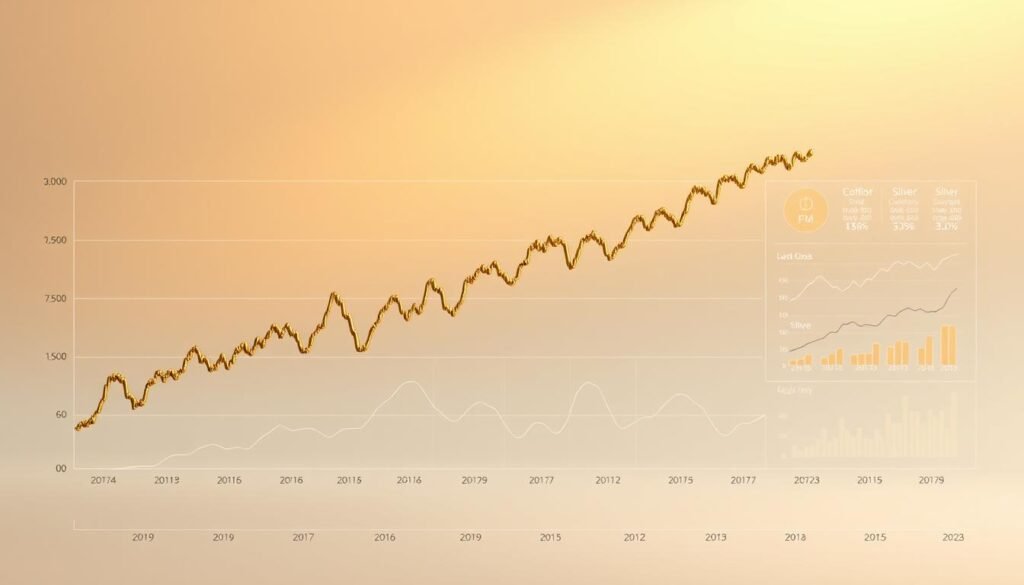
Early 2026 trading reveals some fascinating patterns. While silver plunged about 9% on the final trading day of 2025 (amid heavy profit-taking foxbusiness.com), its roughly 25% surge in the final month tells a different story. Compare today’s price to last year’s ~$29 baseline, and it’s clear why analysts have dubbed 2025 “the year of silver” – the metal’s strongest rally in over 40 years economies.com. In fact, silver futures surged over 150% during 2025 businessinsider.com, far outpacing equities and even gold’s gains.
The brief consolidation we’re seeing now typically signals strength, not weakness. Many savvy traders view these plateaus as launch pads for the next upward move rather than a reversal. Notably, one market expert observed that even after a pullback from “spectacularly high levels,” the “underlying fundamentals of (silver) supply constraints remain factors in the market, and we still have positive prospects going into 2026” foxbusiness.com. With industrial usage and investor demand still at record highs, the stage appears set for sustained momentum heading into the new year.
Key Market Drivers Influencing Silver Prices
The modern economy runs on more than just data and dollars – it’s powered by a metal you might not expect. Two powerful forces now dictate silver’s market movements: technological innovation reshaping consump tion patterns, and financial safeguards against monetary instability.
Tech Revolution Meets Green Transition
Your smartphone and solar panels share a hidden ingredient: silver. Industrial consumption for this critical commodity is shattering records, potentially exceeding 700 million ounces in a year for the first time goldsilver.com. Solar farms and electric vehicle manufacturers have driven much of this growth since the mid-2010s, and now even AI data centers are joining the fray economies.com.
Why the surge? Silver conducts electricity better than any other element, making it indispensable for modern tech. Every 5G tower, solar module, and EV battery relies on its unique properties. Electronics manufacturers alone soak up almost half of all available silver supply each year nasdaq.com – about 460 million ounces in 2024, enough to fill 12 Olympic-sized swimming pools. This voracious demand from high-tech and green industries is creating unprecedented pressure on available supplies.
Financial Safeguards in Uncertain Times
You’re not just holding a shiny asset – you’re owning a shield against currency erosion. In an era of aggressive monetary expansion (U.S. debt hit a record $38.5 trillion in 2025), hard assets like silver gain appeal as hedges against a weakening dollar nasdaq.com. Unlike paper currency, silver’s dual role as an industrial staple and a store of value gives it a rare upside potential during economic turbulence.
Limited supply amplifies this effect. Mines can’t easily ramp up output (most silver is produced as a byproduct of other metals), and investors worldwide are stockpiling bars and coins as a safeguard. Now even government policies are tightening availability – China’s new export licensing rules will restrict silver shipments starting in 2026 nasdaq.com – further squeezing the market. This collision of needs and constraints has built a firm floor under silver’s value, making it a strategic hedge in times of inflation and uncertainty.
Deep Dive into the “silver price forecast 2025”: Trends, Drivers, and Predictions
Market experts are aligning their telescopes on a bright horizon for precious metals. Major financial institutions now paint a unified picture of strength and growth, with technical charts revealing hidden opportunities beneath the surface.
Institutional Forecasts and Analyst Insights
Top banks and research firms agree: the road ahead still looks promising for silver. In fact, many have been revising their outlooks upward after 2025’s explosive gains. Goldman Sachs now expects silver to average $85–$100/oz in 2026, noting that the structural deficit will make sustained dips below ~$70 unlikely economies.com. UBS similarly forecasts around $95/oz for next year, citing ongoing Fed easing and a weaker dollar boosting demand economies.com. Even traditionally conservative analysts have grown bullish – Citigroup has flagged the potential for prices to reach $110/oz by the second half of 2026 if EV-related demand surges and physical shortages intensify economies.com.
Why such consensus? Three core factors drive these outlooks:
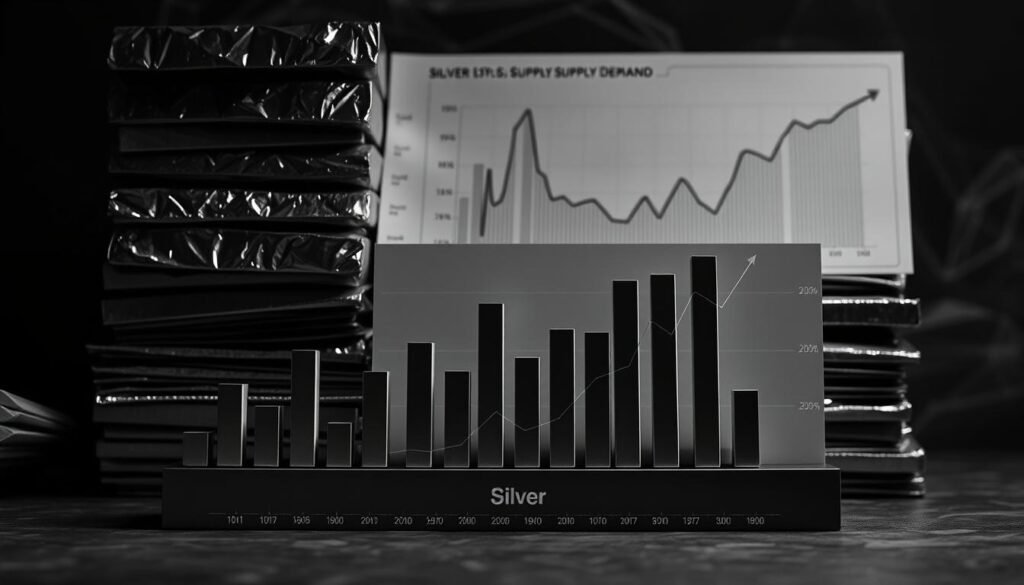
It’s worth noting that the supply-demand imbalance is now impossible to ignore. The Silver Institute projects a sizable supply deficit persisting through 2025 (about 95 million ounces short) – the fifth consecutive annual shortfall silverinstitute.org. Some industry voices even suggest prices may need to exceed $120/oz to ultimately incentivize enough new supply or recycling to close the gap economies.com. In other words, what was once a niche bullish view is becoming a mainstream expectation of robust prices ahead.
This company requires a $50,000 minimum investment.
The charts tell a compelling story of momentum and resilience. Silver’s decisive breakout above its long-standing 2011 high (~$50/oz) confirmed that bulls were in control, and momentum indicators flashed green throughout the second half of 2025. Traders are now watching two key price zones:
Key Level
Significance
$50.00
Prior multi-decade peak (2011 high) – now a major support floor
$100.00
Psychological milestone – a potential stretch target if the uptrend extendsscmp.com
Squeeze and volatility indicators suggest there could still be room for upward surprises. The market’s wild year-end swings underscore how tight conditions became – at one point, one-month silver lease rates (the cost to borrow metal) spiked from ~0.5% to nearly 40% in late 2025 physicalgold.com, highlighting an acute scramble for physical silver. The CME Group even hiked margin requirements ~14% to cool off speculation during the frenzy businessinsider.com.
Even so, silver showed remarkable resilience: after a sharp drop from its $83.6 peak back down to ~$70, prices rebounded about 10% within a day businessinsider.com, indicating strong dip-buying interest. Technically, the current setup provides clear benchmarks for traders. The mid-$60s appear to be a supportive zone where bargain hunters step in, well above the old range. On the upside, the recent $80-$85 high marks initial resistance – and if that is cleared, bullish analysts believe the next stop could be the $100 region. In short, silver’s trend is up, and the technicals are aligning with the fundamentals to create a potentially powerful trajectory.
Supply Deficits and Their Impact on Silver Prices
Picture a game of musical chairs where industrial users and investors are scrambling for seats that keep disappearing. That’s today’s reality in the silver market. Five straight years of unmet demand have drained global stockpiles, creating a structural imbalance that is fundamentally reshaping valuations.
Global Supply Challenges and Mining Output Trends
Mines simply can’t keep up. Global silver production has struggled to grow, constrained by declining ore grades and lack of new major discoveries. (Most silver is a byproduct of mining other metals, so producers have limited flexibility to suddenly increase output.) Meanwhile, demand has surged to record highs. The result? Since 2021, cumulative supply deficits have reached roughly 820 million ounces silverinstitute.org. That’s a silver shortfall equivalent to nearly an entire year’s mine production – a gap that has been filled only by drawing down above-ground inventories.
It’s no surprise, then, that visible inventories are at 15-year lows across major trading hubs. Over a billion ounces of silver have effectively vanished from exchange vaults in recent years as consumption relentlessly outpaced new supply – enough silver to build hundreds of millions of solar panels or electric cars. Yet recycling has barely budged despite the price spike; scrap flows rose only about 1% in 2025 (reaching a 13-year high)silverinstitute.org, which isn’t nearly enough to close the gap.
Here’s what smart investors are watching:
Cumulative deficits exceeding 800 Moz since 2021, signaling a multi-year supply squeeze silverinstitute.org
Inventories at multi-decade lows in London, New York, and Shanghai vaults
These conditions create what analysts call a “supply trap.” When buyers need silver immediately and stockpiles are thin, they’ll pay steep premiums that send spot prices soaring. (Recently, silver in Shanghai traded at a $7–$8/oz premium over London prices due to local shortages disruptionbanking.com.) In practical terms, if your business or portfolio needs physical silver on short notice, you’re now competing – and paying up – in a seller’s market. Your portfolio’s exposure to this sector just became more critical than ever.
Investment Demand and the Role of ETFs in Precious Metals
Imagine your investment portfolio gaining strength from a hidden force that’s reshaping global markets. Exchange-traded products (ETPs) – like silver-backed ETFs – now act as powerful magnets, pulling physical silver off the market and into secure vaults at record speeds. This shift is creating new dynamics (and opportunities) for investors seeking exposure to both the industrial and monetary sides of silver.
Growth in Silver-Backed Exchange-Traded Products
The first half of 2025 saw institutional buyers snap up about 95 million ounces of silver through ETFs, and the pace only accelerated later in the year. By mid-2025, these investment vehicles controlled over 1.13 billion ounces globally silverinstitute.org. By the end of the year, that figure likely exceeded 1.2 billion ounces, locking away nearly 40% of annual silver supply. In dollar terms, at current prices that’s on the order of $80 billion in silver held by funds – effectively removed from the day-to-day spot market.
This institutional hunger supports valuations in two ways. First, each new ETF purchase removes physical supply from circulation, tightening availability for other buyers. Second, it creates a price floor through structural scarcity – industrial users now must compete with deep-pocketed funds for access to metal.
“Exchange-traded product holdings are up by roughly 18%… a year-to-date rise of 187 Moz. … Silver’s exceptional price performance and favorable supply-demand backdrop have further reinforced investor confidence.”silverinstitute.org
Total physical investment demand (bars, coins, and ETFs combined) likely neared record levels in 2025. While retail bar and coin buying in the U.S. slowed earlier in the year, European and Indian investors picked up the slack, and ETF inflows more than made up the difference silverinstitute.org. Going forward, as green technology adoption expands, expect more investors to use silver-backed ETFs as a bridge between financial markets and real-world metal usage. In short, a significant slice of silver’s global supply is now in strong hands – your portfolio strategy should account for both the challenges and the opportunities this creates.
Comparative Market Dynamics of Gold and Silver
While gold shines as the ultimate wealth preserver, silver often burns brighter in growth phases. Consider that roughly 60% of silver’s annual demand comes from industrial uses, compared to barely 10% for gold. This gives silver a volatility (and upside) that gold typically doesn’t match. As one commentator quipped, “Silver isn’t just poor man’s gold — it’s the smart investor’s accelerator.”
The numbers tell the story. With gold near $4,300/oz and silver around $74/oz to close out 2025, the current gold-silver ratio is about 59:1 usagold.com. That’s narrower than it was a year ago (when it was over 90:1 in silver’s favor), reflecting silver’s big run. But it’s still well above the historic average ~67:1 and astronomically above the 8:1 annual production ratio. Translation: silver may no longer be as dirt cheap relative to gold as it was before the rally, but many argue it remains fundamentally undervalued in the grand scheme.
Market Sentiment, Technical Indicators, and Trading Patterns
Market winds are shifting in ways that reward attentive investors. Recent activity shows professional traders and casual enthusiasts alike aligning strategies around clear technical signals and crowd-driven momentum patterns.
CME Futures and Price Volatility Insights
Big money’s betting big. Data from the CME (Chicago Mercantile Exchange) showed large speculators building their largest net-long silver positions in years during 2025’s climb. In essence, institutional traders treated the $30–$50/oz range not as a peak, but as an entry point. This bullish positioning came despite – or perhaps because of – short-term volatility spiking to extreme levels. For instance, one-month silver lease rates (the interest rate for borrowing physical silver) normally hover around 0.3–0.5% per annum; in October 2025, those rates spiked to nearly 40% physicalgold.com due to the shortage of available metal for lease. Such an unprecedented move signaled just how tight the market had become behind the scenes.
Volatility in price itself also jumped. Daily swings of 5–10% became not uncommon on the biggest rally days. In response, exchange officials raised margin requirements by about 13.6% in late December to cool speculation businessinsider.com, a move typically reserved for overheated markets. Yet even this “speed bump” hasn’t dissuaded bullish sentiment – it merely prompted some healthy profit-taking and consolidation of gains. Key support levels moved dramatically upward (from the low $20s a year ago to the $60+ area now), suggesting that higher lows are being established as the new norm.
Retail Investor Trends and Social Sentiment
Your neighbor might be part of this surge. Online forums and social media have played a surprisingly big role in silver’s recent run. The same energy that fueled meme stocks found its way into commodities: communities on Reddit (like WallStreetBets and WallStreetSilver) and influencers on X (Twitter) collectively cheered on the idea of a “silver squeeze.” Google searches for “how to buy silver” and brokerage data showed a wave of new retail entrants in late 2025. In fact, social media buzz helped galvanize many first-time silver buyers, contributing to rapid inflows into physical-backed ETFs.
This grassroots momentum matters. Retail investors collectively added tens of millions of ounces to their holdings via ETFs and coins during the rally – enough metal to theoretically build tens of millions of new electric vehicles. While individual small purchases might seem insignificant, in aggregate they provided a notable demand push alongside institutional buying. When the crowd and the big players push in the same direction, markets tend to listen. We saw this dynamic in action as silver’s price marches were often accelerated by bursts of optimism (and yes, fear of missing out) on social platforms.
Overall, the late-2025 saga proved that social sentiment can indeed drive short-term volatility – especially in a supply-constrained market. Rapid swings occurred when online excitement peaked at the same time that liquidity was thin. For example, when a rumor went viral about a major bank’s short position (unfounded as it turned out), silver spiked sharply before settling disruptionbanking.com. The lesson? Retail traders are now an integral part of the silver story, and their collective actions can sway prices, particularly during periods of macroeconomic uncertainty or market stress.
FAQ
What factors are pushing the metal toward higher valuations by 2025?
Industrial demand from solar panels, EVs, and even 5G tech has been a major driver. Green energy policies and supply shortages (exacerbated by export curbs) have amplified this trend. Inflationary pressures also boosted silver’s appeal as a hedge against weaker currencies, attracting more investment demand.
How does mining output affect future valuations?
Global mining faces challenges like declining ore grades and limited new discoveries. The Silver Institute predicts ongoing supply deficits, which historically tighten availability and support upward price momentum. Since most silver is mined as a byproduct, production can’t quickly ramp up to meet surging demand, so persistent shortfalls can keep prices elevated.
Why do analysts compare it to gold in portfolios?
Both metals serve as hedges against economic uncertainty, but silver’s dual role as an industrial asset creates unique upside (and volatility). In strong markets, silver often outpaces gold’s gains due to its smaller market size and heavier industrial use. Tools like the Gold IRA Match App help investors balance exposure to both metals based on real-time market dynamics.
Can ETFs influence market performance?
Yes. Silver-backed ETFs allow institutions and individuals to gain exposure without holding physical metal. Rising inflows into these funds often correlate with bullish sentiment – they remove available supply from the market. We saw this in 2020–2021 and again in 2025, when large ETF buying helped support higher prices by tightening physical supply.
What role do retail traders play in price swings?
Platforms like Reddit and Twitter (X) have amplified retail participation in the silver market. Social-media-driven buying can contribute to short-term volatility – for example, during the recent rally, online communities promoted a “silver squeeze” that led to sudden price spikes. While fundamentals drive the long-term trend, coordinated retail activity can exaggerate moves, especially in an already tight market.
How reliable are technical indicators for predicting trends?
Technical tools (like moving averages, RSI, and Fibonacci levels) help identify support and resistance zones for silver. For example, once silver sustained trading above roughly /oz (its 2011 high), it signaled a major bullish breakout. Conversely, dips into the – range have been attracting buyers in the current uptrend. While no indicator is perfect, watching these levels can help investors gauge momentum and potential trend reversals.
Is now a good time to add this commodity to your portfolio?
While timing any market is risky, adding silver on pullbacks can lower your entry cost. The metal’s long-term fundamentals (strong industrial use and limited supply) remain positive, but expect ongoing volatility. It’s wise to monitor factors like industrial demand data, central bank policies (interest rates, inflation), and physical ETF holdings. If those indicators remain supportive, gradually accumulating a position in silver – as part of a diversified portfolio – could be a prudent strategy. Always consider your own risk tolerance and investment horizon.